
Click in the middle of the image below to start, keep clicking on the arrow on the right hand side to move to a new frame. You can find one more story at Zeega.com

Click in the middle of the image below to start, keep clicking on the arrow on the right hand side to move to a new frame. You can find one more story at Zeega.com
What if the device could send us images of how we look when engaged in games or messages or email or whatever else people do on their devices? What would we learn if we saw ourselves the way the machines might see us? Alan Levine
Alan points us to something I had not considered when watching In Limbo. The POV of the device. On reading his response to my initial post I was left thinking about the potential use of our devices for learning about ourselves. I often write and talk about this potential. The fact that our devices remember and see us as we are, rather than with the overlay of the self-aggrandising narrative that is characteristic of human experience from the inside, can enable us to learn about our habits and blind spots. Only if we choose to be open to it and look for what is there for us to see.
I can use a simple example: recommendations on my streaming video provider. I might have sophisticated ideas about Mariana the scholar and the type of films she watches. A quick scan to my recommendations tells me that I watch mostly science fiction. I know I like science fiction, I did not know that I watched that almost to the exclusion of any other genre. Just an observation, no value judgement.
What our devices see (both literally and metaphorically) can be a place for self development.
And of course we are not the only ones reflecting on this. There is an app for that.
Lifeslice was developed by Stan James. It takes your photo every hour and ‘can record a host of stats about your time in front of the computer.’
The more arrogant amongst us might ask why we need this. After all, we all know what we do in front of our devices, don’t we? Well, we don’t. Cognitive psychologists spend their life gathering data about how unaware we are about the processes that drive our behaviour. We think we know and that is the most fundamental cognitive error we make in life.
Here is what a recent course on thinking which reviewed the latest cognitive science data had to say about this,
Who better than ourselves to know why we do what we do, what’s important to us, and how we feel? But it seems that we’re largely oblivious to the determinants of our own behaviour, we misjudge how long tasks will take, we think of ourselves as exceptional and unique, and we don’t know what makes us happy. Think 101 – Predicting Badly
You still doubt me? Watch this for a summary of the experimental data.
Of course we do not need Lifeslice to take photos, it is just an example of how we can use our ‘individual and collective memories in the Internet era’ to increase our self awareness rather than just find ourselves constantly ‘fingers swiping, or tapping, and [rarely displaying] an emotion’. We can review our work, we can organise it, we can track our browser histories with a critical eye to habits that may be unhelpful… and all of this requires that we engage with our devices with the conscious and purposeful intention to attend resisting the divergence or not, but choosing.
We always come back to ‘we have seen the enemy and it is us’.
Enlarge
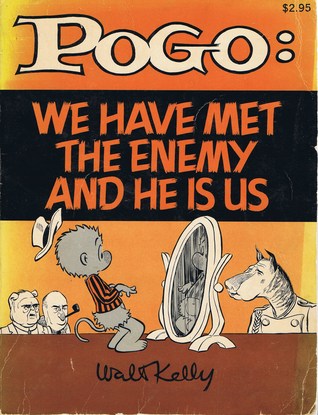

An end of semester gift to my students who have reaffirmed my faith in the human capacity for participatory thought. This is for all of you to say thank you!
I have taught a course on Mindful Communication this semester. I created an ‘interpersonal meditation lab’ and invited my students to join me. It was all online and it was a closed community. Yet, the rules were simple.
Enlarge

Designed by @mdvfunes
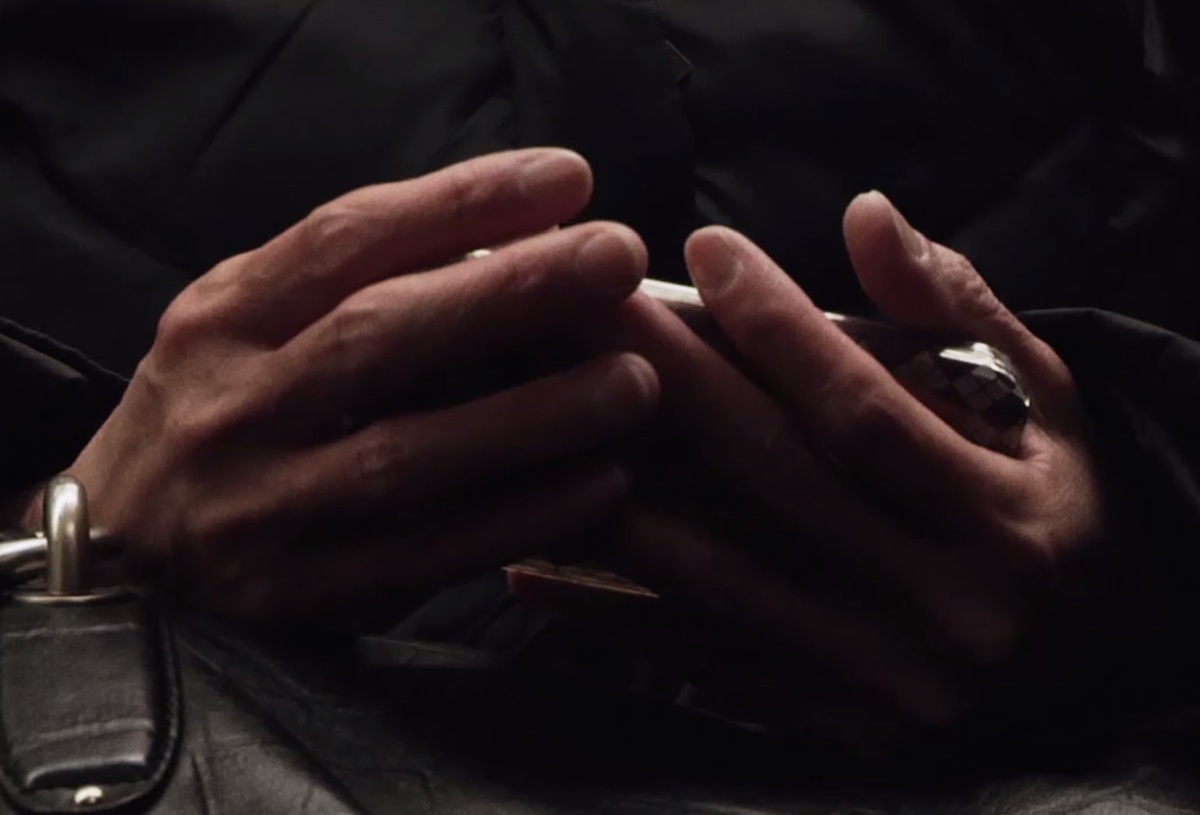
In her launch of this dialogue, Mariana started with the experience of Paul Miller in living a year without using the internet.
I was haunted by that blank face of his as the busy world (is that New York City?) passed by him; he was the only one standing slow. He was in limbo.
Because I pay a lot of attention to the visual design of sites and movies, I am first drawn to two interstitial sequences that depict our interaction with the devices most of us carry. The stereotypical ones are not surprising, busy urban locations and images of many people focused entirely on their devices.

But a later sequence did an interesting flip- it showed from the devices perspective, the blank faces of people staring at the screen. This is what we look like?


The humans all look catatonic. Where is their interaction? Their laughter? The devices are feeding them streams of the human condition, why do their souls looks so under nourished?
When in public I sneak observe the faces of people looking at their mobile devices. Fingers swiping, or tapping, I rarely seen an emotion, maybe just a sly smirk.
I ran this as a Daily Challenge for The You Show, with not too many responses. Well I made one (because I made the site)
https://twitter.com/cogdog/status/568475592473112577
Like a mirror (black?) these screens see our faces all the time. We have a different intent when we set the camera to aim at ourself, when making a selfie. What if the device could send us images of how we look when engaged in games or messages or email or whatever else people do on their devices? What would we learn if we saw ourselves the way the machines might see us?
https://vimeo.com/99893181
When despair for the world grows in me
and I wake in the night at the least sound
in fear of what my life and my children’s lives may be,
I go and lie down where the wood drake
rests in his beauty on the water, and the great heron feeds.
I come into the peace of wild things
who do not tax their lives with forethought
of grief.
I come into the presence of still water.
And I feel above me the day-blind stars
waiting with their light.
For a time
I rest in the grace of the world, and am free.
-Wendell Berry

“IN LIMBO questions the future of our individual and collective memory in the Internet era, from the point of view of all the data that will survive us. Built around a story of thirty minutes uploading your personal data, IN LIMBO takes you to the heart of a sensory journey in our connected memory.”
This is the start of a series of collaborative blogging here on the Still Web.
We are experimenting with the idea of text-based online dialogue and tentatively searching for ways to interact that are beyond seeking to prevail in debate. Some emerging rules for our dialogues are that we will connect with something and share perspectives, maintaining our own voice whilst listening to the other in resonance or dissonance. So this is not a review of this web documentary, more a series of blog posts to explore the impact this artefact had on each of us with our particular biases, pet subjects and associative trails.
A first attempt to make meaning out of very mixed emotions is bound to be fuzzy. I both hate it and love it each time I watch it. Yet, mostly it fills me with a sense of despair for our humanity. We play with something just because we can, rarely stopping to consider the implications. What is the future of our individual and collective data in the Internet era? This documentary tells me that I will in not too long be asking very specific questions of this ‘collective intelligence’. Here is Raymond Kurzweil from the film,
“So I would probably ask this intelligence, what should my goals be, why am I here and what should I be doing and what kind of creations should I seek to make. I ask myself these questions because I don’t have this intelligence but these are the questions we will be able to ask of artificial intelligence in the future.”
No, I will not.
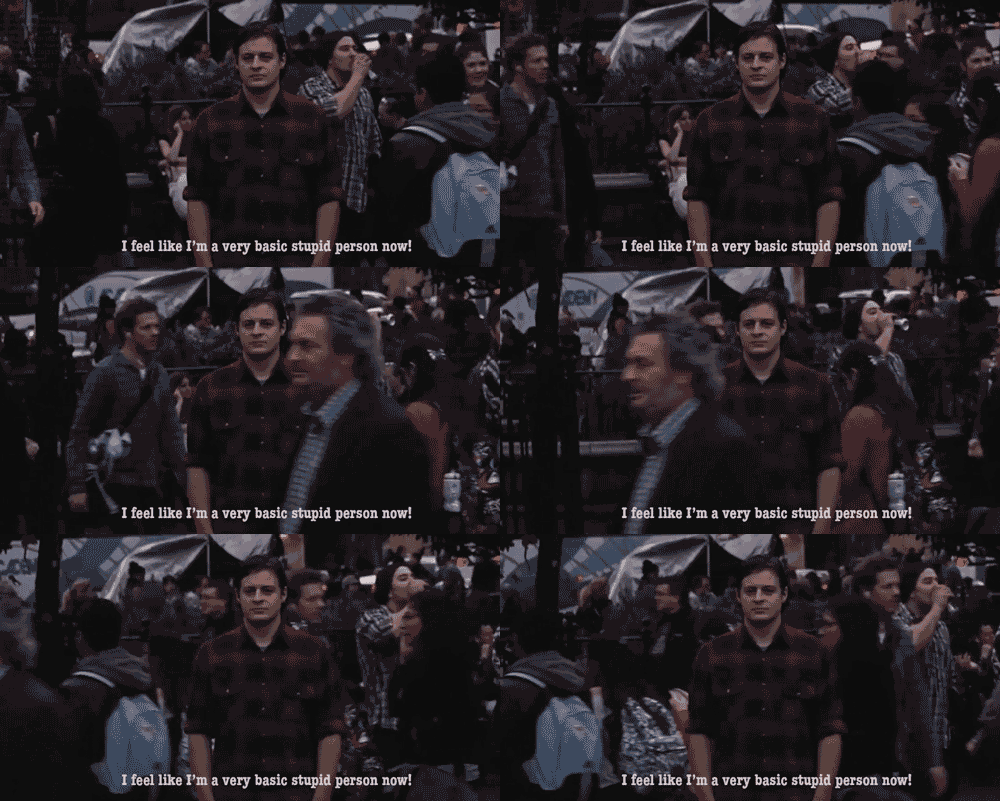
Paul Miller tells me that being disconnected from the web for a year has left him feeling stupid. He talks about how initially being disconnected felt like a mystical experience, after a while it became normal and towards the end it made him like ‘a failure. I felt like I was giving up once again. But I knew the internet was where I belonged.’
His main learning was that connecting with other human beings without the web was hard and he did not have the resilience or tenacity to do this without it. I was left thinking that so many of these type of experiments have more to do with the personality of the individual undertaking them than with what they can teach us about the consequences of the way we use the web.
As I listen to his perspective on the film, I compare it with the way I handled my digital retreat over the holidays just gone. I was not focussed on disconnection because ‘it’ is causing me harm (as was Paul’s narrative from the start) but on how is it possible to be in the digital world in stillness? Our chosen frame of mind going into this kind of experiment matters so much. Paul concludes ‘I won’t have as much time to read or introspect or write the great American sci-fi novel. But at least I’ll be connected.’ Of course, he had the time to do all of that during his year offline, but instead he slept all day and played video games all night. This is not said in judgement, it is said to highlight that it is the inner not the outer that determines what we do with our technology or without it.
With a frame of ‘how can I make it work?’ or ‘how can we preserve the best of x and still do y?’ There is no need for any extreme detox or cold turkey as we live each day in resentment. If we go cold turkey to avoid ‘harm’, we move away from the ‘thing’ and are still defined by the ‘thing’ in its absence. We miss it and still cling to it. I am reminded giving up smoking except for that last cigarette at the end of the day. I spent all day thinking about that last cigarette.
In Paul’s case the Internet defined him, his associative trails online was who he was and importantly defined him as a social animal. Away from it he met his shadow and did not like it. And rather than take a look in the mirror, he found not-wifi-dependent distractions. He was not himself. In some ways, I too believe that we are our associative trails online. I also believe that the identity we bring to a mediated environment follows a simple law: Garbage in, garbage out. Or stillness in, stillness out. Simple in a way.
This collective and individual memory in the internet era has a potential that does fascinate me and is spoken to in the film. Our self narrative is anything but objective and objective data collection over years and over platforms can offer a view of the self that has to potential to surprise us and challenge our blind spots. Another voice from the film,
“Keeping track of yourself seems innately important – if I measure the self in the world I get to see the self you never get to know otherwise. If I collect enough data I can get to understand who that unseen self is.”
That edge between ‘delight and discomfort’ that Charlie Brooker speaks to in the series Black Mirror, is where the potential for exploration might be. Our espoused theories of mind and our theories in use are quite often poles apart, psychology warns. If is possible, as the film suggests, that my computer knows more details about me than my mother, that it knows you better than you know yourself, then may be, just may be, if we put this data together it could surprise us. So there is a push-pull dynamic here. Do I want to see my shadow? Paul’s case study seems to suggest: no. Yet there is an allure to seeing the unseen. What if in gathering all this data together I learnt about patterns I have not seen in my actions to date? The film tells us about data artist Liesl Capper who believes that
“the self we put on the web is more real than real, I am confined by nature but on the web I can be anyone, a true representation of what is in my soul and mind.”
She suggests that we are inexorably heading in a direction where the self is ‘more and more abstracted, thinking about thinking as opposed to doing’ because of digital mediation. She suspends judgment as to the value of this, but sees it as inevitable. Do we want to see our reflection warts and all?
I go back to Black Mirror. In the episode ‘The entire history of you’ we learn about he Grain,
“what if you had a kind of Sky Plus system for your head, so you could rewind and replay memories at will? You’d never forget where you left your keys again, for one thing. And it would be great for winning arguments. But it might not be brilliant news for the health of your relationship. After all, how much do you actually want to know about each other?”
The grain allows for what In Limbo only hints at. Total recall. Dinner parties where your day can be the subject of a ‘re-do’ over dinner. Delight and discomfort. In Limbo sees the delight more than the discomfort and goes as far at to speculate about the Internet as a religion. We come to it looking for cybergrace. In Limbo presents the views of Jim Gilliam who finds it hard to connect with old religions yet holds certain moral values he sees as coming from the Internet. He suddenly realised that,
“my value system and my morality was coming from the internet. Everything I value – sharing, connecting, openness, transparency and authenticity – everything I value. The internet is my religion.”
In the world of the Grain in Black Mirror there is no privacy, yet no big corporation is taking it away. It is human beings giving it up willingly for the comfort of total recall. The comfort of not having to even try to remember anymore. As David Whiteland says: ‘You should never underestimate the power of comfort. To our everlasting discredit, we owe our utter dependency on technology to our inability to resist it.’ In Limbo picks this theme up too. George Dyson,
People always say if we turn our computers off it [any intelligence] disappears, therefore we are still in control. But can we turn our computers off? Would they let us? We don’t know.
Agency here is put on the computer, but the more interesting question is: Can we turn our computers off? In the sense that even if we want to we cannot bring ourselves to be without them. Who can resist the allure of total recall? Not the people at Internet Archive,
We see the web as collective memory here at the internet archive. What we do is in concert with religion. A coming together. Every light that blinks on our servers is someone uploading or downloading something. Three million people a day using these machines.
Amen.
I recall, with my faulty organic memory, that after 20 years of meditation and retreats only 2 years ago could I bring myself to leave my smart phone in the lock up at the monastery as we are requested to do. I rarely used it but I could not bring myself to be without it.
What are the unintended consequences of a world where ‘digital remembering is the default and it is forgetting that is often forgotten’? Even in death we might be able to remember In Limbo enthuses about this very possibility. Black Mirror paints a different picture. The episode that speaks to this is ‘Be right back’ where Martha loses Ash, is grief-stricken and finds herself rebuilding an artificially intelligent Ash from the collected computer data of his whole life,
“Over the following days, Martha is overwhelmed by grief, and soon discovers that she is pregnant. Becoming emotionally unstable, she responds to the artificial Ash’s e-mail. She starts to communicate with him through instant messaging, and informs him of the pregnancy. She then uploads videos and photos of Ash to the service’s database, and the service duplicates Ash’s voice to talk to Martha over the phone. Martha allows herself to believe that she is talking to her dead partner, and over the following weeks she talks to the artificial Ash almost non-stop, keeping him updated regarding the pregnancy. After Martha accidentally damages her phone and has a panic attack when she temporarily loses contact with the service, the artificial Ash tells her about the service’s next stage, which is still in its experimental phase: a body made of synthetic flesh that the program can be uploaded onto.”
To our everlasting discredit, we owe our utter dependency on technology to our inability to resist it.
What do we lose when we remember everything? Ironically, I see that in our transition from the transient to the permanent (from fallible human memory to exhaustive digital memory) we are faced with our own impermanence. We could choose to see how a digital self that is ‘more real than real’ yet more about ‘thinking than about doing’ ‘makes it more obvious to us how our own life is finite but the world goes on’. In Limbo ends here.
The fact of impermanence, so strongly resisted in our culture, seen in flashing server lights as we watch our immortal digital selves live on.


I have been a meditation practitioner for most of my life. Over the last 3 years I have been on retreat working on ways to bring my meditation practice into the way I interact online. The Still Web project is my way to engage with the idea that digital stillness and dialogue is about training the mind not choosing the right technology. As Thich Nhat Hanh wisely reminds us, no device can change a blocked mind.
We can change how we relate to our devices and through this create a space for dialogue that is about discovery and mind walking rather than finding ever more creative ways for our well-trodden views to prevail over others. This blog post is a first attempt to translate what is a fairly advanced meditation practice, insight dialogue, into ideas we can use to build a collaborative blogging methodology where,
“we are not trying to make our points prevail or, if we are, we look at that. Our challenge is to see when each of us is trying to prevail, because if anybody prevails it means the dialogue has failed” (David Bohm).
Insight Dialogue is an interpersonal meditation practice developed by Gregory Kramer. I say it is a fairly advanced practice because it is usually not taught until one’s own individual meditation practice is well established. This is because it requires us to control our habit mind in the most challenging of situations, when we are talking to each other. It relies on 6 simple guidelines that take a lifetime or two to practice.
The challenge for us here is to explore how something that is taught face to face in long retreats at monasteries and retreat centres, can be useful to generate a different kind of interaction with our devices and through this the possibility of opening up a new conversational space online.
It turns out that Gregory Kramer has given us a helping hand. Online insight dialogue has been going on since 1995 and the guidelines have a track record in helping people run both synchronous and asynchronous meditation sessions online. I have read his book many times, but only today as we start to explore what collaborative digital dialogue might mean, I notice a whole section in the book on precisely how to use the guidelines for online interpersonal meditation practice. What was interesting to me in this section of the book was this comment,
Using the Insight Dialogue guidelines during other online meetings—an increasingly common aspect of daily life—helps people manifest greater mindfulness and calm in those encounters. Such practice can help temper the emotional outbursts, or flaming, that can arise online in the absence of aural and visual cues. Text-based practice centers around the simple fact that the words shared in meditation remain visible on the screen long after they are “spoken.”
So Gregory Kramer is already hinting in 2012 at the potential value of this approach in online interaction. He also clearly states that a possible advantage of text-based asynchronous dialogue is ‘a reflective quality of practice not available in video conferencing or in-person practice and can be reason enough to opt for text-based practice.’
It requires a commitment to the pause and to speaking from silence without attachment to outcome. A conversation that is a meander through a country lane not a search for the fastest highway to the destination. Underneath all of that, it requires making the commitment of time. It is okay to set a fixed time, sometimes all we have is a fixed period of time. We do that in meditation. What is less skilful is to decide what content and how much will be ‘done’ once the time period is up. My online session might be just 1 hour; what matters is that the frame of mind I set for that hour is ‘now I will practice digital dialogue’ rather than ‘now I will read 10 posts and comment on 5’.
I know that over the years as I practice insight dialogue, I find myself more and more humble about the truth of just how much ‘we do not see what is actually happening when we are engaged in the activity of thinking’ (David Bohm). I started this journey with the arrogance of a cognitive psychologist who clearly (not) knew what she was thinking as she was acting in the world. Today, I know we simply do not have a clue and when we start to have a clue all we can do is add judgement to ignorance by being critical of our failings or that of others. A perhaps hidden aspect, or hidden to some non-buddhists at least, is the need for overarching compassion in approaching digital dialogue – without it seeing the depth of the pond that is our habit mind (with all the rubbish abandoned at the bottom over the years) is something most humans cannot bear to sit with for long.
Below I have taken highlights from the section that speaks to online insight dialogue and the use of the guidelines and recorded a short podcast. Let’s see what you make of it.
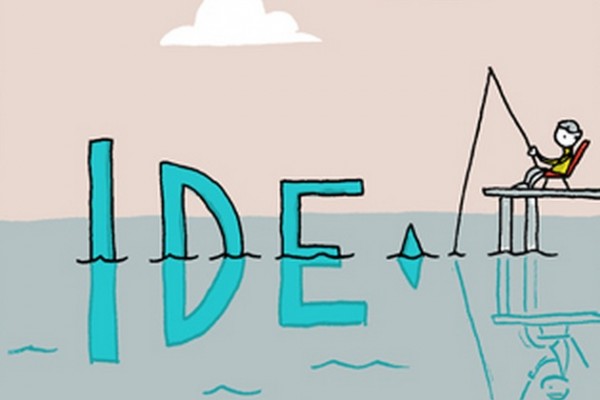

From a great series of Grant Snider’s Incidental Comics Shape of Ideas (all worth looking at! and buying a poster of!), a rather relevant panel
Out of moments of stillness… arise the most unexpected ideas.
These comics play with the word “idea” and metaphors messages created by the style and lettering of text. The beauty of these particular two panels is the open-ended suggestion of what “un-expected” might mean.
For some, it is “OMG A SHARK!” For others, “YAY, I M SO HAPPY ITS A SHARK!”
And for the shark? Was he/she enjoying a moment of stillness before deciding to nibble what was on the end of the line?
